
FDA food labeling regulations under 21 CFR Part 101 are detailed and frequently updated. We review your food product labels for compliance before they go to market, preventing costly recalls, import refusals, and warning letters.
Nutrition Facts Panel Review
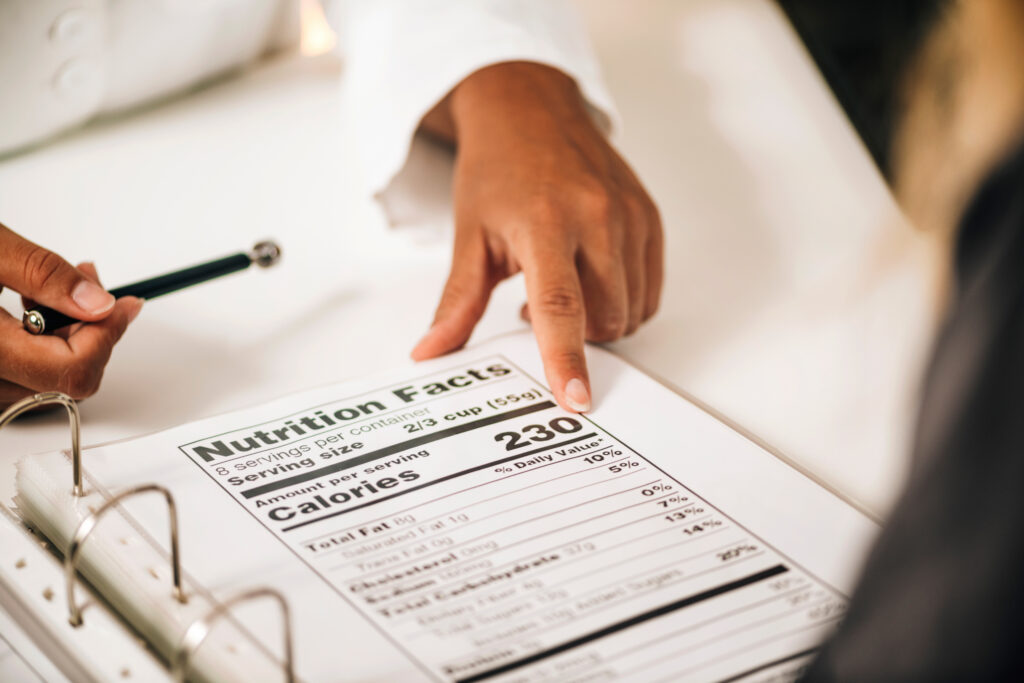
We verify your Nutrition Facts panel meets current FDA requirements, including serving size, daily value percentages, and mandatory nutrients.
- Serving size & servings per container
- Mandatory & voluntary nutrient review
- Daily Value percentage verification
- Updated FDA 2020 format compliance

Ingredient Statement & Allergens
We review ingredient lists for proper order, common & scientific name requirements, and compliance with FASTER Act allergen labeling rules.
- Descending weight order verification
- All 9 major allergens (FASTER Act)
- Sesame labeling compliance (2023)
- Sub-ingredient disclosure review
Health & Marketing Claims
We review your product claims including health claims, nutrient content claims, and structure/function claims for FDA substantiation requirements.
- Authorized health claims review
- Nutrient content claims verification
- Structure/function claims
- Organic & natural claims guidance


Country of Origin & Net Quantity
We verify your net quantity declaration under FDA labeling rules, and your country of origin marking under U.S. Customs requirements, so your product clears both checkpoints.
- Country of origin verification
- Net quantity declaration review
- Principal display panel compliance
- Information panel requirements
Ready to get your labels reviewed? Register Now:
We check every label element against current FDA and Customs requirements before you go to market.
Food Label Review FAQs
Most food labeling requirements, including Nutrition Facts, ingredient statements, allergens, and claims, fall under 21 CFR Part 101.
No. It’s enforced by U.S. Customs and Border Protection under the Tariff Act of 1930, separate from FDA’s labeling rules. We help you meet both.
Yes. Since 2023, the FASTER Act requires sesame to be declared as one of the nine major food allergens.
Non-compliant labels can trigger import refusals, detentions, warning letters, or costly recalls after the product is already on shelves.